An ablative laser removes the surface of the skin; a non-ablative laser heats the layer beneath it and leaves the surface intact. That difference decides almost everything about recovery: ablative treatments mean a week or more of raw, weeping skin and months of pinkness, while non-ablative treatments mean a few days of redness and little or no time off. This explainer compares the two so you know what to expect.
The difference in one paragraph
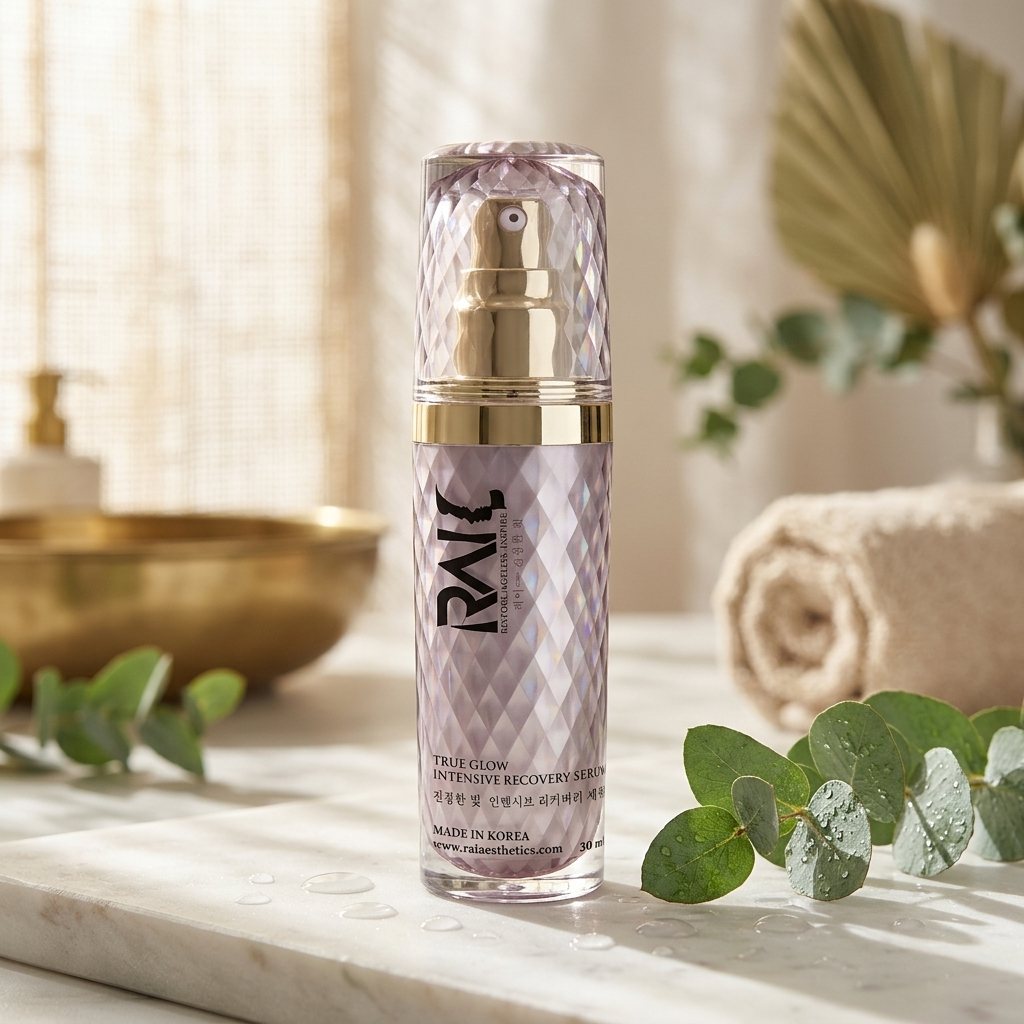
Ablative lasers (CO2 and erbium:YAG) vaporise the epidermis and heat the dermis beneath it, so the skin has to grow a new surface before anything else can happen. Non-ablative lasers (the 1550 nm Fraxel-type devices, 1064 nm Nd:YAG and similar) pass through the surface without removing it and heat the dermis to prompt new collagen, so there is no open wound to heal. Fractional versions of either type treat the skin as a grid of tiny columns, leaving untreated skin between them to speed healing. The Mayo Clinic summarises the practical result: a non-ablative laser is less aggressive and has a shorter recovery time, with subtler results. Whichever you have had, the first days are about keeping the skin cool, clean and hydrated; once your doctor clears you to resume skincare, a hydrating recovery serum after laser is a common choice, as a cosmetic that supports comfortable skin rather than a treatment for the wound.
Ablative vs non-ablative: side-by-side comparison
The table below compares the two families on the points that matter for recovery. Fractional ablative lasers sit between the columns — gentler than a full-field CO2 pass, more demanding than any non-ablative device.
| Ablative (CO2, Er:YAG) | Non-ablative (incl. fractional non-ablative) | |
|---|---|---|
| What it does | Removes the epidermis and heats the dermis | Leaves the surface intact; heats the dermis only |
| Surface after treatment | Open, raw, weeping; dressings often needed | Intact; pink, sometimes bronzed or rough |
| New skin surface | Covers the area in about 7–10 days (Mayo Clinic); DermNet gives one to four weeks to heal completely | Not needed — the surface was never removed; in fractional devices new epidermal cells form within about 24 hours |
| Redness | Can look inflamed for several months | Pink for about 3–5 days after a fractional non-ablative session; bronze tone 3–14 days |
| Swelling | Marked in the first days; up to a week after aggressive fractional ablative passes | Usually minimal, settling in 2–3 days; often only hours |
| Pain | Typically more painful; anaesthesia and post-treatment pain relief usual | Minimally painful; may need no anaesthesia |
| Time off | Full recovery at least a month; the surface usually closes in one to two weeks | Most return to work the same or next day |
| Sessions | Often a single full-field treatment; fractional ablative 2–4 | Usually 2–4, a month or more apart |
| Pigment and scar risk | Higher risk of scarring and of lasting colour change, especially in darker skin | Lower, but dyspigmentation still the main concern in darker or tanned skin |
| Aftercare intensity | Wound care: prescribed ointments or dressings, soaks, strict sun avoidance for weeks | Simplified skincare: cool, hydrate, sunscreen; actives paused for days |
Figures come from the Mayo Clinic's laser resurfacing overview and DermNet's pages on laser resurfacing and fractional laser treatment, listed at the end. They describe typical courses; your clinic's protocol may differ.
Why recovery time differs so much
Because an ablative laser creates a wound and a non-ablative laser does not. After CO2 or erbium resurfacing the body must re-cover the area with new epidermis before the skin can hold water, keep out bacteria or tolerate any product — the Mayo Clinic puts that at 7–10 days, with full recovery taking at least a month. Until then the skin weeps, crusts and needs the kind of care you would give a graze. A non-ablative laser leaves the barrier in place, so the recovery you see is the inflammation from heat in the dermis: pinkness, a little swelling and, with fractional devices, a bronze speckling as the heated columns of tissue are shed over one to two weeks. Our explainer on the skin barrier after aesthetic procedures explains why that intact surface matters so much.
Why ablative treatments stay pink for months
Once an ablative wound has closed, the new skin is thinner than the old and the dermis beneath it is still busy remodelling, with a richer blood supply than usual. Both make the area look pink long after it has stopped feeling sore; the Mayo Clinic notes the skin may look inflamed for several months, and DermNet advises sunscreen until the redness has subsided completely. That prolonged phase is also when post-inflammatory hyperpigmentation forms in darker skin, which is why aftercare after an ablative laser lasts weeks rather than days. For a day-by-day account, see our guides to skin recovery after CO2 laser and what to put on the skin after ablative resurfacing. If pinkness is lasting longer than you were told, our page on redness that won't go away after laser covers the common causes.

Pain: what each type feels like
Ablative treatments are typically more painful than non-ablative ones, both during and after. Full-field CO2 or erbium resurfacing is usually done under local anaesthesia with sedation or nerve blocks, and the first few days are managed with pain relief and cool packs; DermNet describes ice packs and sleeping with the head raised for the early swelling. Non-ablative sessions are described as minimally painful — a hot, prickling sensation that a topical numbing cream and cold air keep tolerable — and may need no anaesthesia at all; DermNet notes a sunburn-like feeling for about an hour after a fractional non-ablative pass. Pain that increases after day two, rather than easing, is not expected with either type and should be reported to your treating doctor.
Pigmentation risk in Asian and darker skin
Both families can cause colour change, but the risk is higher with ablative lasers and higher again in Fitzpatrick types III–V. The Mayo Clinic states that people with brown or Black skin have a higher risk of long-term skin colour changes after laser resurfacing, and DermNet lists dyspigmentation in dark or tanned skin as the main concern even for the gentler non-ablative devices, recommending a test spot and strict sun avoidance. In practice, clinics treating Singapore skin tend to favour fractional and non-ablative approaches, lower energies and more sessions, and to insist on sunscreen for weeks afterwards. Our guides on post-inflammatory hyperpigmentation and dark patches after laser explain how PIH looks and how it differs from the normal shedding of treated pigment.
How much aftercare each one needs
Ablative recovery is wound care; non-ablative recovery is simplified skincare. After an ablative laser you can expect prescribed ointments or dressings, gentle soaks, no makeup until the surface has closed, and sun avoidance for weeks; nothing goes on the skin that your doctor has not approved. After a non-ablative or fractional non-ablative laser the list is shorter: cool the skin, cleanse gently, hydrate with a plain fragrance-free product, use broad-spectrum sunscreen from the day your clinic advises, and keep exfoliants, retinoids and vitamin C off until the bronzing has gone. Our explainer on what not to do after laser gives the full checklist for both, and our guide to choosing a post-laser recovery serum covers what to look for once products are allowed. Whichever laser you have had, follow your treating doctor's instructions over any general guide, including this one.
Frequently asked questions
What is the difference between ablative and non-ablative laser?
An ablative laser (CO2 or erbium) removes the outer layer of skin and heats the layer beneath, creating a wound that must heal. A non-ablative laser heats the deeper layer without removing the surface, so there is no open wound. Recovery, pain and aftercare scale with that difference; your treating doctor's instructions apply to either.
How long is recovery after an ablative laser compared with non-ablative?
After ablative resurfacing, new skin usually covers the area in about seven to ten days, full recovery takes at least a month and pinkness can last several months. After a non-ablative laser most people return to normal activity the same or next day, with pinkness for a few days. Follow your treating doctor's timeline.
Is non-ablative laser safer for Asian skin?
Colour change is the main risk in darker skin with either type, but it is more common and longer-lasting after ablative lasers. Many clinics treating Fitzpatrick III–V skin prefer fractional or non-ablative devices, lower energies and more sessions, with strict sunscreen use afterwards. Discuss your skin type with your treating doctor and follow their instructions.
When can I use skincare after an ablative versus non-ablative laser?
After an ablative laser, only the ointments or dressings your doctor prescribed until the surface has fully closed, usually one to two weeks. After a non-ablative laser, a plain hydrating product and sunscreen can often start within a day or two. A post-laser recovery serum is a cosmetic for that stage; follow your treating doctor's instructions on timing.
References
- Mayo Clinic Staff. Laser resurfacing. Mayo Clinic (mayoclinic.org), Tests & Procedures; published 26 Oct 2024. https://www.mayoclinic.org/tests-procedures/laser-resurfacing/about/pac-20385114
- Gray M, Ngan V. Laser resurfacing. DermNet (dermnetnz.org); 1997, updated 2008; page modified 2024. https://dermnetnz.org/topics/laser-resurfacing
- Ngan V, Oakley A. Fractional laser treatment. DermNet (dermnetnz.org); 2007, updated 2015; page modified 2026. https://dermnetnz.org/topics/fractional-laser-treatment
- Alexiades-Armenakas MR, Dover JS, Arndt KA. The spectrum of laser skin resurfacing: nonablative, fractional, and ablative laser resurfacing. Journal of the American Academy of Dermatology. 2008;58(5):719-737. doi:10.1016/j.jaad.2008.01.003. PMID 18423256. https://doi.org/10.1016/j.jaad.2008.01.003