After Rejuran or a skinbooster, expect small raised bumps at each injection point for 24 to 72 hours, some redness, and possibly a few bruises that fade over a week. Aftercare is simple: keep the skin clean and hydrated, do not massage the bumps unless your doctor tells you to, and delay makeup until the entry points have closed. Your treating doctor's instructions always come first.
What Rejuran and skinboosters do to the skin
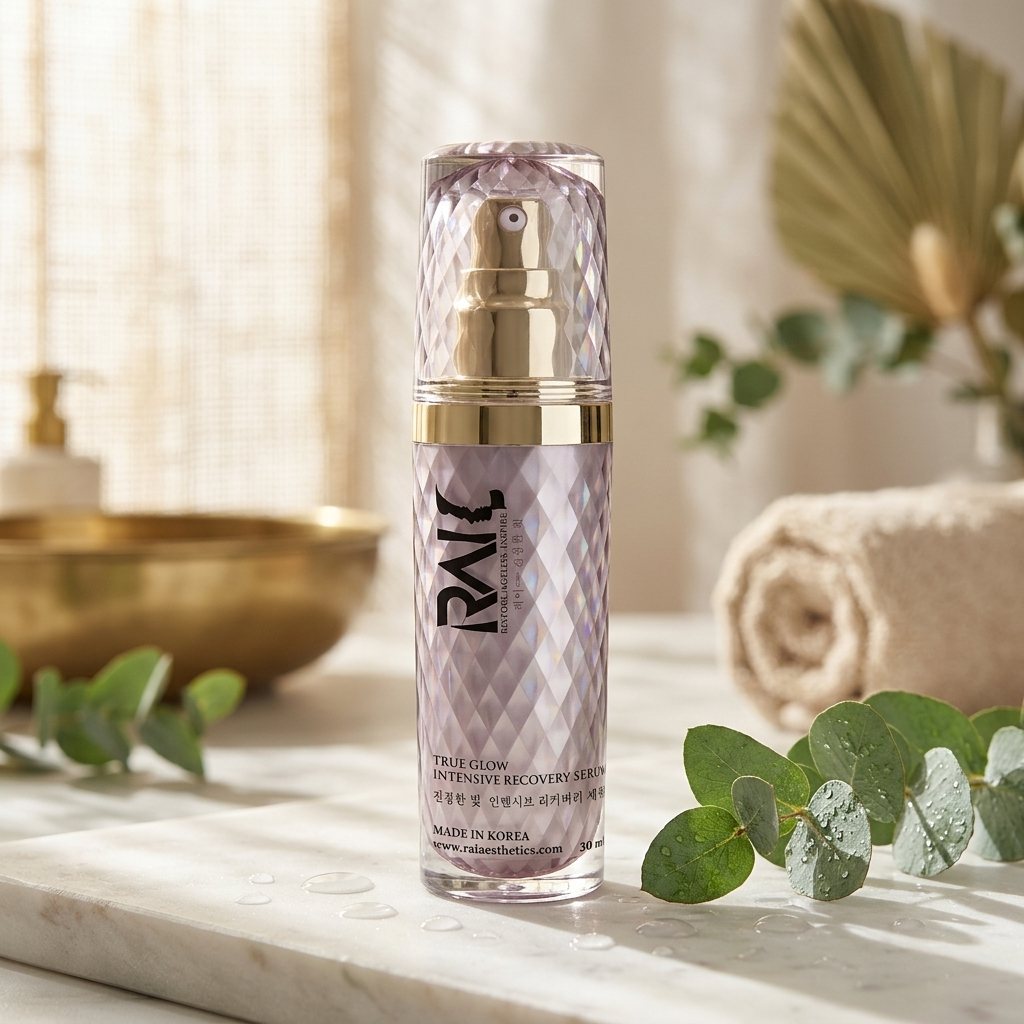
Rejuran (a polynucleotide injectable) and hyaluronic acid skinboosters are placed as many tiny intradermal deposits across the face, rather than as a single volume of filler, so the skin shows dozens of small bumps that flatten as the product disperses. A systematic review in the Journal of Cosmetic Dermatology that pooled nine polynucleotide studies covering 219 patients described adverse effects as generally mild and transient, and a pilot study of a hyaluronic acid skinbooster in 20 adults reported no serious or persistent effects apart from one transient nodule. The injuries are needle punctures, not heat or resurfacing, so there is no peeling phase; the aftercare is about letting the entry points close cleanly and keeping the skin hydrated while it settles. Once your doctor clears you to resume skincare, usually from the next morning, a fragrance-free post-procedure recovery serum pressed on gently is a common choice for the first few days.
The bumps: why they appear and how long they last
The raised bumps are simply the product sitting in the upper skin at each injection point; they are expected and usually flatten within 24 to 72 hours, sometimes a little longer on thinner skin such as under the eyes. Bump duration varies with the product used and where it was placed; ask your clinic what to expect for yours. Bumps that are still visible at day five, feel firm, or become red and tender are worth a message to the clinic. Do not press, pinch or roll them: squeezing can push product out of the entry point, bruise the skin or spread it unevenly. Clinics sometimes ask patients to massage lightly after specific products; do that only if you were told to, exactly as shown.
| Timing | What you see | What to do |
|---|---|---|
| First 6 hours | Raised bumps, pinpoint redness, mild swelling, occasional pinprick bleeding | Cool compress through a cloth; nothing on the skin except clinic products; hands off |
| Day 1 | Bumps softening; redness fading; any bruises appear | Gentle cleanse, hydrating serum pressed on, SPF 50+; no makeup over open points |
| Days 2–3 | Most bumps flat; bruises turning yellow-green | Makeup allowed once entry points are closed; keep hydrating |
| Days 4–7 | Skin looks normal; bruises fading | Resume usual routine gradually; still no facials or massage |
| Weeks 2–4 | Hydration and texture changes become noticeable | Next session commonly at two to four weeks as your doctor schedules |
Bruising: what is normal and what is not
Small bruises at some injection points are common and fade over five to ten days; a large, spreading, painful or hard bruise is not normal and should be reported. A review in Clinical, Cosmetic and Investigational Dermatology on injectable adverse events describes bruising and trauma-related swelling as the typical mild, transient reactions. Bruising is more likely around the eyes and mouth, or after blood-thinning medicines, supplements or alcohol. Cool compresses in the first day help; after that, leave bruises alone and cover them with mineral makeup once the skin is closed. Do not apply heat, rub them or use arnica or other products on the area unless your doctor has agreed. Any bruise that is unusually painful, expanding, or accompanied by pale, mottled or dusky skin needs same-day contact with your clinic, because very rarely an injectable can affect blood flow and that needs prompt medical assessment.

Aftercare: what to do and what to avoid in the first week
Clean hands, no pressure, hydration, sunscreen and patience cover almost everything.
Do
- Keep the face clean: wash hands before touching it, cleanse gently with lukewarm water and fingertips from the next morning, pat dry.
- Hydrate: a fragrance-free serum or bland moisturiser pressed on (not rubbed) two to three times a day.
- Use broad-spectrum SPF 50+ each morning and avoid direct sun for a week; freshly needled skin pigments easily in Fitzpatrick III–V skin.
- Sleep on your back with a clean pillowcase for the first night or two to avoid pressing the bumps.
- Drink water normally; there is no need to over-hydrate.
Avoid
- Massage, facials, gua sha, rollers and any device on the face for one to two weeks unless your doctor instructs massage for a specific product.
- Makeup over open entry points; wait until they have closed, usually 12 to 24 hours.
- Heat and sweating for 24 to 48 hours: saunas, steam, hot yoga, intense exercise and long hot showers, which increase swelling and bruising.
- Alcohol for 24 hours and blood-thinning supplements unless prescribed, which worsen bruising.
- Retinoids, acids, vitamin C and scrubs for about a week, or until your doctor clears them; see when to restart retinol after procedures.
- Lasers, microneedling, peels and other injectables on the same area until your doctor schedules them, typically at least two weeks.
- Swimming and other shared water until the entry points have closed.
Dr Sin Yong recommends a hydrating recovery serum for his own patients from the day the skin has closed. If you are choosing a product yourself, our guide to choosing a post-procedure recovery serum explains what to look for.
Makeup, exercise and your usual routine: timing
Makeup can usually go on once every entry point has closed, often by the next morning; exercise after 24 to 48 hours; and your normal skincare, one product at a time, from about day three to seven once the bumps and redness have gone. Mineral makeup applied with a clean sponge and removed gently suits the first week; colour-correcting concealer over closed skin is fine for bruises. For a fuller timeline across procedures, our explainer on how long redness lasts after procedures puts Rejuran and skinboosters alongside lasers and peels. Skinboosters are often alternated with microneedling or laser; that aftercare is longer, so see our guide to recovery after microneedling if that applies to you. If your injections were fillers or botulinum toxin rather than skinboosters, the no-pressure rules are similar but the details differ; see skincare after fillers and Botox.
When to contact your doctor
Most Rejuran and skinbooster recoveries need no follow-up before the next scheduled session. Contact your clinic, with a photo, if you notice:
- Bumps that are still raised at day five, are growing, or become firm, red and tender.
- A bruise that is large, expanding, very painful or hard.
- Redness and swelling that increase after day two rather than settling, or feel hot.
- Pus, yellow crusting, an unpleasant smell or fever.
- Clusters of small painful blisters, particularly with a history of cold sores.
- Hives, itching or swelling spreading well beyond the injected area.
- New brown patches at injection points after the redness has faded; see our guide to post-inflammatory hyperpigmentation.
Seek care urgently, on the same day, if the skin over or near the injections turns pale, blotchy, dusky or purple, feels unusually painful, or if you have any change in vision. These are rare, but they need a doctor immediately. Your treating doctor can judge whether a change is part of the normal course or needs attention, and will tell you what to stop and what to continue.
Frequently asked questions
How long do the bumps last after Rejuran or skinboosters?
Raised bumps at each injection point usually flatten within 24 to 72 hours; duration varies with the product used, and thinner areas such as under the eyes can take a little longer. Bumps still visible at day five, or that become firm or tender, should be shown to your clinic. Follow your treating doctor's instructions.
Should I massage the bumps after skinboosters?
Not unless your doctor specifically told you to. Pressing or rolling the bumps can push product out of the entry points, bruise the skin or spread it unevenly. Most products disperse on their own within a few days. If your clinic did ask for light massage, follow your treating doctor's instructions exactly on how often and for how long.
When can I wear makeup after Rejuran?
Once every entry point has closed, usually by the next morning and sometimes the same evening. Use mineral or non-comedogenic makeup applied with a clean sponge, and remove it gently without rubbing. Avoid covering any point that is still open or weeping. Follow your treating doctor's instructions, as some clinics ask for a full 24 hours.
What skincare should I use after skinboosters?
Keep it simple for the first week: a gentle fragrance-free cleanser, a hydrating post-procedure recovery serum or bland moisturiser pressed on two to three times a day, and SPF 50+ each morning. Hold retinoids, acids, vitamin C and scrubs until the bumps and redness have gone and your doctor clears them. Follow your treating doctor's instructions on timing.
Is bruising normal after Rejuran and skinboosters?
Small bruises at some injection points are common and fade over five to ten days, more often around the eyes and mouth or after alcohol and blood-thinning supplements. A large, expanding, hard or very painful bruise, or skin that looks pale, blotchy or dusky, is not normal and needs same-day contact with your clinic. Follow your treating doctor's instructions.
References
- Lampridou S, Bassett S, Cavallini M, Christopoulos G. The effectiveness of polynucleotides in esthetic medicine: a systematic review. Journal of Cosmetic Dermatology. 2025;24(2):e16721. doi:10.1111/jocd.16721. PMID 39645667; PMCID PMC11845969. https://doi.org/10.1111/jocd.16721
- Lee KWA, Chan KWL, Lee AY, Lee CH, Wan J, Wong THS, Yi KH. Polynucleotides in aesthetic medicine: a review of current practices and perceived effectiveness. International Journal of Molecular Sciences. 2024;25(15):8224. doi:10.3390/ijms25158224. PMID 39125793; PMCID PMC11311621. https://doi.org/10.3390/ijms25158224
- Lee JH, Kim J, Lee YN, Choi S, Lee YI, Suk J, Lee JH. The efficacy of intradermal hyaluronic acid filler as a skin quality booster: a prospective, single-center, single-arm pilot study. Journal of Cosmetic Dermatology. 2024;23(2):409-416. doi:10.1111/jocd.15944. PMID 37705328. https://doi.org/10.1111/jocd.15944
- Funt D, Pavicic T. Dermal fillers in aesthetics: an overview of adverse events and treatment approaches. Clinical, Cosmetic and Investigational Dermatology. 2013;6:295-316. doi:10.2147/CCID.S50546. PMID 24363560; PMCID PMC3865975. https://doi.org/10.2147/CCID.S50546