Aftercare sheets and consultations are full of words — ablative, erythema, PIH, TEWL, MENDs — that are rarely explained. This glossary defines 30 of the most common terms in one or two plain sentences each, in alphabetical order, so you can read your own instructions with confidence. It explains vocabulary only; your treating doctor's instructions always take precedence over anything written here.
How to use this glossary
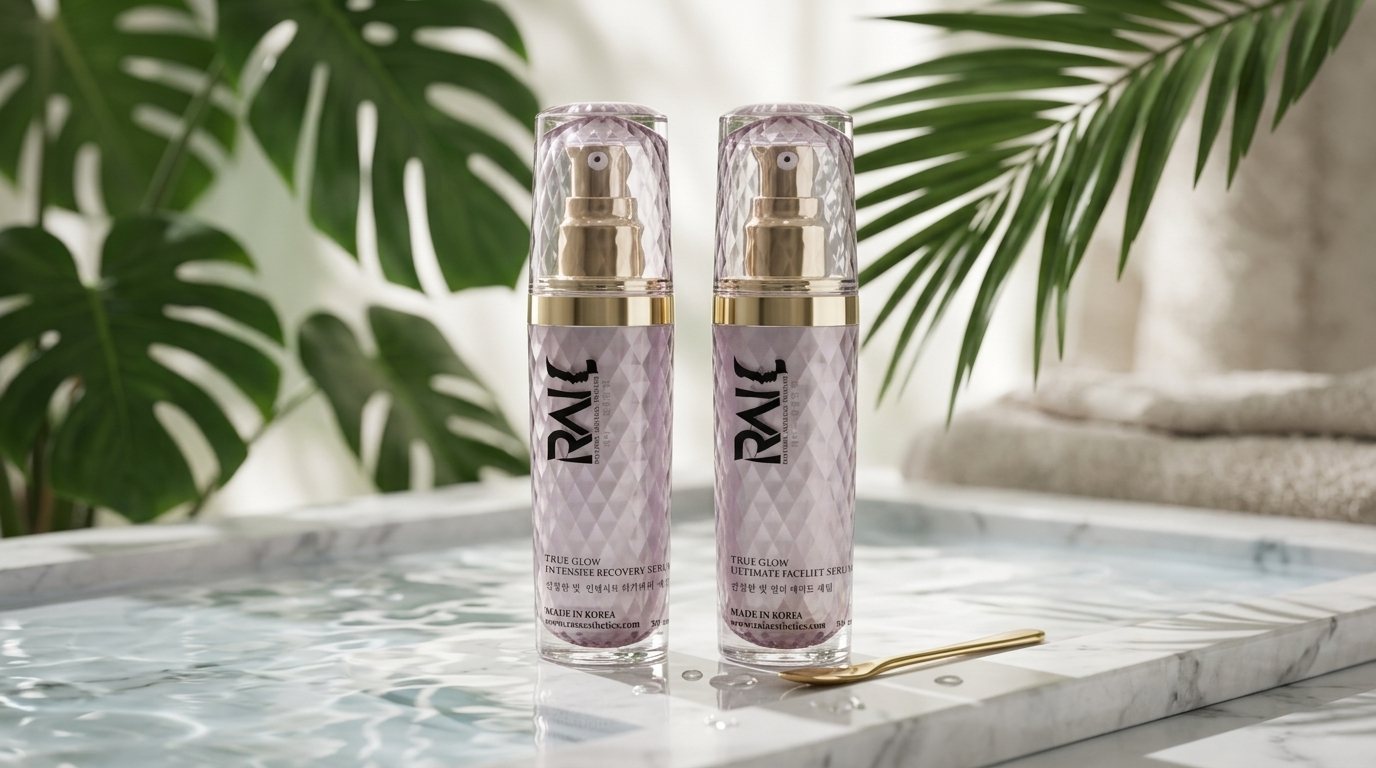
Each term below gets a one- or two-sentence definition and, where it helps, a link to the guide on this site that covers it in depth. Terms are grouped alphabetically (A–F, G–M, N–S, T–Z). A few recur constantly: ablative versus non-ablative decides how long your recovery will be, erythema is simply the clinical word for redness, and PIH is the pigment complication that Asian skin is most prone to. Where a definition mentions skincare, remember that the first days after most procedures are product-free until your doctor says otherwise; once you are cleared to resume skincare, a hydrating post-laser recovery serum is a common choice, as a cosmetic for comfort and hydration rather than a treatment for any of the conditions defined here.
A–F
Ablative laser
A laser (CO2 or erbium:YAG) that removes the outer layer of skin and heats the layer beneath, creating a controlled wound that must grow a new surface. Recovery is measured in weeks; see our ablative vs non-ablative comparison.
Actives
Skincare ingredients chosen for a specific effect rather than hydration: exfoliating acids, retinoids, vitamin C and brightening agents. They are paused after procedures because healing skin stings and reddens easily; our guide on when to restart retinol after procedures covers the timing.
Barrier (skin barrier)
The outermost layer of the epidermis, the stratum corneum, together with the lipids between its cells: the structure that holds water in and keeps irritants and microbes out. Most procedures disrupt it deliberately, which is why aftercare is built around hydration and avoiding irritants.
Bronzing
The tanned, speckled look that appears a day or two after a fractional laser as the treated columns of skin darken before they are shed. DermNet describes it lasting around one to two weeks after a fractional non-ablative session; it is expected, not a complication.
Crusting
Dried serum and skin cells forming a scab-like layer over a treated area, common after ablative lasers and medium-depth peels. Thin, dry crusts are normal; thick, yellow, honey-coloured or spreading crusts are a reason to contact your clinic.
Downtime
The period after a procedure when your skin is visibly healing — red, swollen, flaking or crusted — and you may not want to be seen. It ranges from none (IPL, HIFU) to several weeks (fully ablative resurfacing).
Dyspigmentation
Any unwanted change in skin colour after a procedure, either darker (hyperpigmentation) or lighter (hypopigmentation). It is the main concern for darker and tanned skin with every energy-based treatment.
Erythema
The clinical term for redness, caused by widened blood vessels bringing extra blood to the skin during inflammation. Expected after almost every procedure; how long it lasts is covered in our explainer on how long redness lasts after procedures.
Fitzpatrick skin type
A six-point classification of skin by how it responds to sun, from type I (always burns, never tans) to type VI (never burns, always tans darkly). Most Singapore skin falls in types III–V, which carry a higher risk of post-inflammatory hyperpigmentation after procedures.
Fractional
A way of delivering laser or radiofrequency energy as a grid of tiny treated columns with untreated skin between them, so the surrounding skin speeds healing. Both ablative and non-ablative lasers come in fractional versions.
Frosting
The white or grey film that appears on the skin during a chemical peel or immediately after a pigment laser pulse. In peels it signals the depth the acid has reached; after a Pico or Q-switched laser it is a brief whitening of the spot that fades within minutes to hours.

G–M
HIFU
High-intensity focused ultrasound, an energy treatment that heats points deep in the skin and the layer beneath it to tighten tissue, leaving the surface intact. Redness is brief; tenderness, mild swelling or patches of numbness can last longer. See our HIFU recovery guide.
HSV prophylaxis
Preventive antiviral medicine prescribed before and after resurfacing lasers or deeper peels for people with a history of cold sores, because the herpes simplex virus can reactivate across freshly treated skin. Whether you need it, and the dose, is a decision for your treating doctor.
Hypopigmentation
Lightening of the skin after injury or treatment, from loss of pigment cells or their activity. It is less common than hyperpigmentation but can be longer-lasting, which is one reason clinics use caution with high energies in darker skin.
IPL (intense pulsed light)
A broad-spectrum flash of light, not a laser, used for redness and pigment spots. Treated pigment darkens and flakes off over the following days; pinkness usually settles over a few days, and most people return to work the same day.
MENDs
Microscopic epidermal necrotic debris: the tiny columns of heat-treated tissue that a fractional non-ablative laser leaves in the skin, which rise to the surface and shed as the bronzed, sandpaper-textured phase. Their shedding is the mechanism behind bronzing and should not be scrubbed or picked.
Microneedling
Fine needles making thousands of controlled micro-channels in the skin to trigger repair, also called skin needling or collagen induction therapy. Redness usually lasts about a day and, if prolonged, generally settles within a week; see our microneedling recovery guide.
Milia
Small, firm white bumps formed when skin cells are trapped under the surface, sometimes appearing weeks after resurfacing or microneedling, often where heavy ointments were used. They are harmless and can be removed by a clinician; do not squeeze them.
N–S
Non-ablative laser
A laser that passes through the skin surface without removing it and heats the dermis to prompt new collagen. Recovery is days rather than weeks, with pinkness and sometimes bronzing but no open wound.
Occlusive
A product or dressing that seals the skin to stop water escaping, such as petrolatum-based ointments or the dressings used after ablative resurfacing. Useful on open skin as directed; on closed skin, heavy occlusives are a common cause of post-procedure breakouts and milia.
Oedema
Swelling from fluid collecting in the tissue, usually worst on the morning after a procedure and around the eyes. After microneedling it generally settles within one to three days; after ablative lasers and medium peels it can last about a week.
PIH (post-inflammatory hyperpigmentation)
Brown patches left where inflamed or injured skin has healed, because inflammation stimulates melanin production. DermNet describes it as more common, darker and longer-lasting in darker skin types, and notes that peels, lasers and IPL can aggravate it by injuring the epidermis; see our guide to post-inflammatory hyperpigmentation.
Post-inflammatory erythema (PIE)
Pink or red marks that persist after inflammation — classically after acne — because of dilated or damaged small blood vessels rather than pigment. Unlike PIH it does not darken with sun, and it blanches when pressed.
Radiofrequency microneedling
Microneedling with radiofrequency energy delivered through the needle tips, so the tissue beneath is heated as well as punctured (Morpheus8 is one such device). Redness and swelling last longer than after plain microneedling, typically up to a few days; see our Morpheus8 recovery guide.
Re-epithelialisation
The regrowth of a new epidermis across an area where the old one was removed, as after an ablative laser or medium-depth peel. It is the milestone most aftercare sheets mean by "once the skin has closed", when ointments give way to ordinary hydration and sunscreen.
Stratum corneum
The outermost layer of the epidermis, made of flattened dead cells packed in a lipid matrix, and the main site of the skin's permeability barrier. Superficial peels and microdermabrasion work here; deeper procedures go through it.
Sunscreen, broad-spectrum
A sunscreen that protects against both UVA and UVB, applied every morning from the day your clinic clears it, because fresh skin pigments easily for weeks. It is the single most consistent instruction across every procedure's aftercare.
T–Z
TEWL (transepidermal water loss)
The rate at which water evaporates through the skin, used in research as a measure of barrier function: a disrupted barrier lets more water out and TEWL rises. It is why post-procedure skin feels tight and dry and why hydration is the core of aftercare; see our explainer on the skin barrier after aesthetic procedures.
Thermal injury
Heat damage beyond what the treatment intended — a burn — showing as blistering, white or grey patches, or pain and redness concentrated in one area. It needs same-day review by your treating clinic; our page on blisters or burns after laser explains what to do and what not to apply.
Weeping
Clear or straw-coloured fluid seeping from skin whose surface has been removed, normal in the first days after ablative resurfacing and deeper peels. Cloudy, yellow or green fluid, or weeping that returns after it had stopped, should be reported to your doctor.
Using these terms with your clinic
Knowing the vocabulary makes aftercare easier to follow, but it does not replace the sheet your clinic gave you; protocols differ by device, settings and skin type, so ask if anything conflicts. For the practical side of recovery, see what not to do after laser and how to choose a post-laser recovery serum. Follow your treating doctor's instructions in every case.
Frequently asked questions
What does downtime mean after a laser or peel?
Downtime is the visible healing period — redness, swelling, flaking or crusting — during which you may not want to be seen or cannot wear makeup. It ranges from none after IPL or HIFU to several weeks after fully ablative resurfacing. Your clinic will give an estimate for your settings; follow your treating doctor's instructions on returning to normal activities.
What is the difference between PIH and PIE?
PIH (post-inflammatory hyperpigmentation) is brown pigment left after inflammation and is more common in darker skin; it darkens with sun. PIE (post-inflammatory erythema) is pink or red marks from dilated small blood vessels; it blanches when pressed and does not darken with sun. If you notice either after a procedure, follow your treating doctor's instructions.
What does TEWL mean for my skin after a procedure?
TEWL, or transepidermal water loss, is the rate at which water evaporates through the skin. Procedures that disrupt the barrier raise it, which is why treated skin feels tight and dry. Aftercare focuses on hydration and avoiding irritants until the barrier settles. Use only the products your clinic has approved and follow your treating doctor's instructions.
What is HSV prophylaxis and do I need it?
HSV prophylaxis is preventive antiviral medicine prescribed around resurfacing lasers or deeper peels for people with a history of cold sores, because the virus can reactivate across freshly treated skin. Whether you need it, which medicine and what dose are medical decisions. Tell your clinic about any cold-sore history and follow your treating doctor's instructions.
References
- Ngan V, Oakley A. Postinflammatory hyperpigmentation. DermNet (dermnetnz.org); 2005, updated December 2015; page modified 2024. https://dermnetnz.org/topics/postinflammatory-hyperpigmentation
- Oakley A. Skin phototype (Fitzpatrick skin type). DermNet (dermnetnz.org); 2012; page modified 2024. https://dermnetnz.org/topics/skin-phototype
- Ngan V, Oakley A. Fractional laser treatment. DermNet (dermnetnz.org); 2007, updated 2015; page modified 2026. https://dermnetnz.org/topics/fractional-laser-treatment
- Lei D, Liu D, Zhang J, Zhang L, Man M-Q. Benefits of topical natural ingredients in epidermal permeability barrier. Frontiers in Physiology. 2023;14:1275506. doi:10.3389/fphys.2023.1275506. https://www.frontiersin.org/articles/10.3389/fphys.2023.1275506